Missing a tooth is no longer a problem you have to live with or settle for a temporary fix. More millennials are choosing dental implants over traditional bridges, and the shift reflects a new perspective on dental care. This generation wants solutions built to last, not treatments that might need replacing in a few years.
The reasons for this trend go beyond personal preference. Millennials tend to research their options and prioritize long-term value over upfront savings. They also appreciate how implants preserve their natural jawbone and protect surrounding teeth. At Simpson Dental PLLC in Charleston, WV, we’ve seen this shift firsthand as younger patients come in wanting permanent solutions for missing teeth.
Long-Term Durability and Cost-Effectiveness
Traditional bridges typically last 10 to 15 years before needing replacement. Dental implants can last a lifetime with proper care. For millennials planning decades of use, the math is straightforward.
A bridge requires altering adjacent teeth to support the replacement tooth, creating potential vulnerabilities. If one of these supporting teeth fails, the entire bridge may need replacement. Implants stand independently, meaning your other teeth remain untouched and healthy. This independence also makes cleaning easier, you can floss and brush normally without working around complicated bridge structures.
The initial investment in implants might seem higher, but repeated bridge replacements add up. When you factor in the potential costs of treating damaged support teeth, implants become a sensible financial decision.
Preserving Jawbone and Facial Structure
When you lose a tooth, the jawbone beneath it begins to deteriorate. Bridges sit on top of the gums and do nothing to prevent this bone loss. Over time, the jawbone can shrink, affecting facial appearance and potentially causing other teeth to shift.
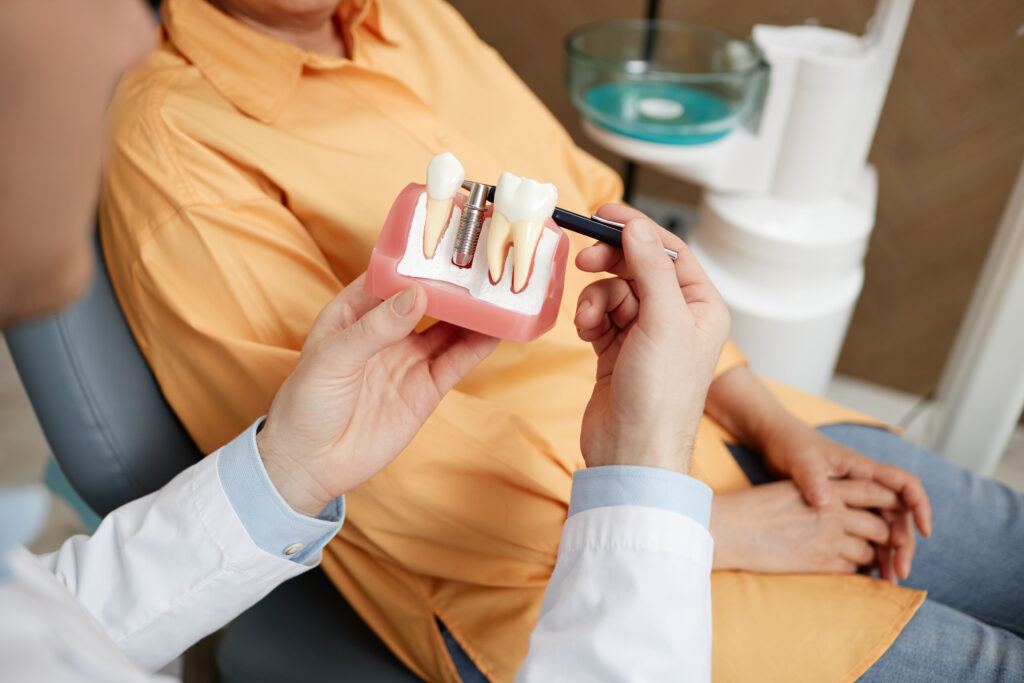
Implants function like natural tooth roots. They stimulate the jawbone through regular chewing and biting, preventing the bone loss that occurs with other tooth replacement options. This stimulation keeps your jaw strong and maintains your facial structure.
Millennials understand the connection between oral health and overall wellness. Maintaining jawbone density isn’t just about appearance. It affects speech, eating ability, and the stability of other teeth. An implant addresses the root cause of these issues rather than masking the symptoms.
Lifestyle and Social Considerations
Millennials lead active lives and want dental solutions that keep up. Bridges can feel restrictive, you might need to avoid certain foods or be extra careful during physical activities. Implants function exactly like natural teeth, no dietary restrictions or special precautions needed.
Social confidence matters too. Bridges can sometimes slip or feel loose, creating anxiety during conversations or meals. Implants are permanently fixed in place, giving you complete confidence in any social situation. You don’t need to worry about embarrassing moments or whether your tooth replacement looks natural.
The aesthetic results also factor into the decision. Modern dental implants are virtually indistinguishable from natural teeth. The crown sits at gum level just like a real tooth, with no visible metal or artificial-looking materials.
Restore Your Smile at Simpson Dental PLLC
Choosing between implants and bridges affects your oral health for years to come. At Simpson Dental PLLC, we’ve been serving Charleston families with advanced dental care going back to 1948 when Dr. Bob founded our practice. Today, Dr. Christen Simpson Raynes continues this legacy with the most advanced technology in West Virginia, including hybrid ceramic zirconia implants for patients seeking the best in modern dentistry. We understand millennials want honest information and quality results. Our three full-time lab technicians combine 60 years of experience to create restorations that look natural and function perfectly. If you’re ready to explore implant options, contact us to schedule a consultation with our team.
We understand millennials want honest information and quality results. Our three full-time lab technicians combine 60 years of experience to create restorations that look natural and function perfectly. If you’re ready to explore implant options, contact us to schedule a consultation with our team.
Frequently Asked Questions About Dental Implants for Millennials
Are dental implants a good option for younger adults in their 20s and 30s?
Dental implants are an excellent option for younger adults who have finished growing, typically by their late teens or early 20s. Because implants integrate with the jawbone, they can last decades without needing replacement, making them particularly cost-effective for someone who will use them for 40 or 50 years. The key candidacy factors are adequate jawbone density, good overall health, and a commitment to maintaining the implant with regular dental visits. A consultation with your dentist will determine whether you are a candidate based on your specific anatomy.
Dental implants are an excellent option for younger adults who have finished growing, typically by their late teens or early 20s. Because implants integrate with the jawbone, they can last decades without needing replacement, making them particularly cost-effective for someone who will use them for 40 or 50 years. The key candidacy factors are adequate jawbone density, good overall health, and a commitment to maintaining the implant with regular dental visits. A consultation with your dentist will determine whether you are a candidate based on your specific anatomy.
How long do dental implants last compared to traditional bridges?
Traditional bridges typically last 10 to 15 years before they need to be replaced, often requiring additional work on the adjacent teeth that support them. Dental implants, when properly placed and maintained, can last 20 to 30 years or longer, and in many cases the implant post itself lasts a lifetime. The crown portion may eventually need to be refreshed, but the underlying structure remains stable. For someone in their 20s or 30s, this difference in longevity translates to significantly fewer procedures and lower cumulative costs over a lifetime.
Traditional bridges typically last 10 to 15 years before they need to be replaced, often requiring additional work on the adjacent teeth that support them. Dental implants, when properly placed and maintained, can last 20 to 30 years or longer, and in many cases the implant post itself lasts a lifetime. The crown portion may eventually need to be refreshed, but the underlying structure remains stable. For someone in their 20s or 30s, this difference in longevity translates to significantly fewer procedures and lower cumulative costs over a lifetime.
Does getting a dental implant hurt?
The implant placement procedure is performed under local anesthesia, so you should not feel pain during the surgery itself. Some soreness and swelling in the days following the procedure are normal and manageable with over-the-counter pain relievers in most cases. Many patients report that the recovery is more comfortable than they anticipated. The healing period after placement typically spans a few months while the implant fuses with the jawbone, but this phase does not involve significant ongoing discomfort for most patients.
The implant placement procedure is performed under local anesthesia, so you should not feel pain during the surgery itself. Some soreness and swelling in the days following the procedure are normal and manageable with over-the-counter pain relievers in most cases. Many patients report that the recovery is more comfortable than they anticipated. The healing period after placement typically spans a few months while the implant fuses with the jawbone, but this phase does not involve significant ongoing discomfort for most patients.
Can I get a dental implant if I had a tooth extracted years ago?
Yes, but the longer a tooth has been missing, the more bone loss may have occurred at that site. Bone naturally resorbs after a tooth is removed, which can reduce the volume available to support an implant. In cases where significant bone loss has occurred, a bone graft procedure may be recommended before or at the time of implant placement to rebuild the site. This is a common and well-established step that many patients with long-standing tooth loss go through successfully. Your dentist will evaluate bone volume with imaging to determine what is needed in your specific case.
Yes, but the longer a tooth has been missing, the more bone loss may have occurred at that site. Bone naturally resorbs after a tooth is removed, which can reduce the volume available to support an implant. In cases where significant bone loss has occurred, a bone graft procedure may be recommended before or at the time of implant placement to rebuild the site. This is a common and well-established step that many patients with long-standing tooth loss go through successfully. Your dentist will evaluate bone volume with imaging to determine what is needed in your specific case.
What is the recovery time for a dental implant?
Most patients return to normal activities within a day or two of the implant placement procedure, though the complete healing process takes longer. The implant integrates with the jawbone over a period of roughly three to six months, during which time a temporary restoration may be placed. Once the implant has fully fused with the bone, the final crown is attached. The total timeline from surgery to completed restoration varies by patient and whether any preparatory procedures were needed, but your care team will walk you through a schedule tailored to your situation.
Most patients return to normal activities within a day or two of the implant placement procedure, though the complete healing process takes longer. The implant integrates with the jawbone over a period of roughly three to six months, during which time a temporary restoration may be placed. Once the implant has fully fused with the bone, the final crown is attached. The total timeline from surgery to completed restoration varies by patient and whether any preparatory procedures were needed, but your care team will walk you through a schedule tailored to your situation.
ABOUT THE AUTHOR
Dr. Christen Simpson Raynes
Dentist, Simpson Dental PLLC — Charleston, WV
Dr. Christen Simpson Raynes is a third-generation dentist at Simpson Dental PLLC in Charleston, West Virginia, a practice her family founded in 1948. She and her partner Dr. Chase Preston have collectively restored over 6,000 dental implants and lead a team that delivers same-day implant solutions through an on-site lab staffed by technicians with a combined 60 years of experience.
Schedule a Consultation