Medically Reviewed by Dr. Christen Simpson Raynes on September 28, 2026
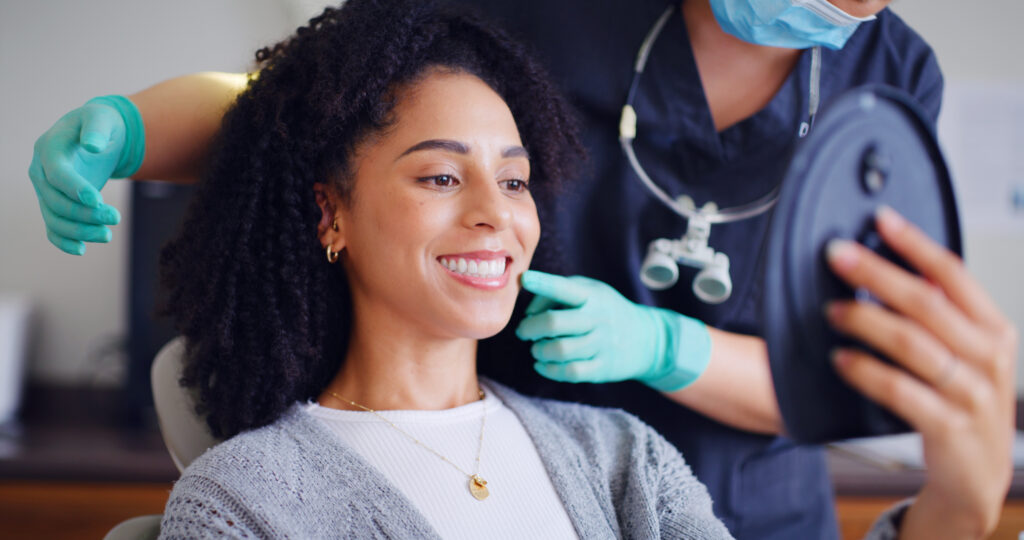
Full-mouth reconstruction gives patients more than a new smile. It restores your ability to eat, speak, and go about your day without discomfort or self-consciousness. The weeks and months following your treatment are a time of meaningful, positive change, and knowing what to expect can help you move through the process with confidence.
At Simpson Dental PLLC, Dr. Christen Simpson Raynes and Dr. Chase Preston have supported patients through recovery in Charleston, West Virginia, building on a family legacy of dental care that stretches back to 1948. With an on-site dental lab staffed by three full-time technicians with a combined 60 years of experience and over 6,000 restored implants, our team is prepared to support every stage of your recovery.
The First Weeks: What Healing Looks Like
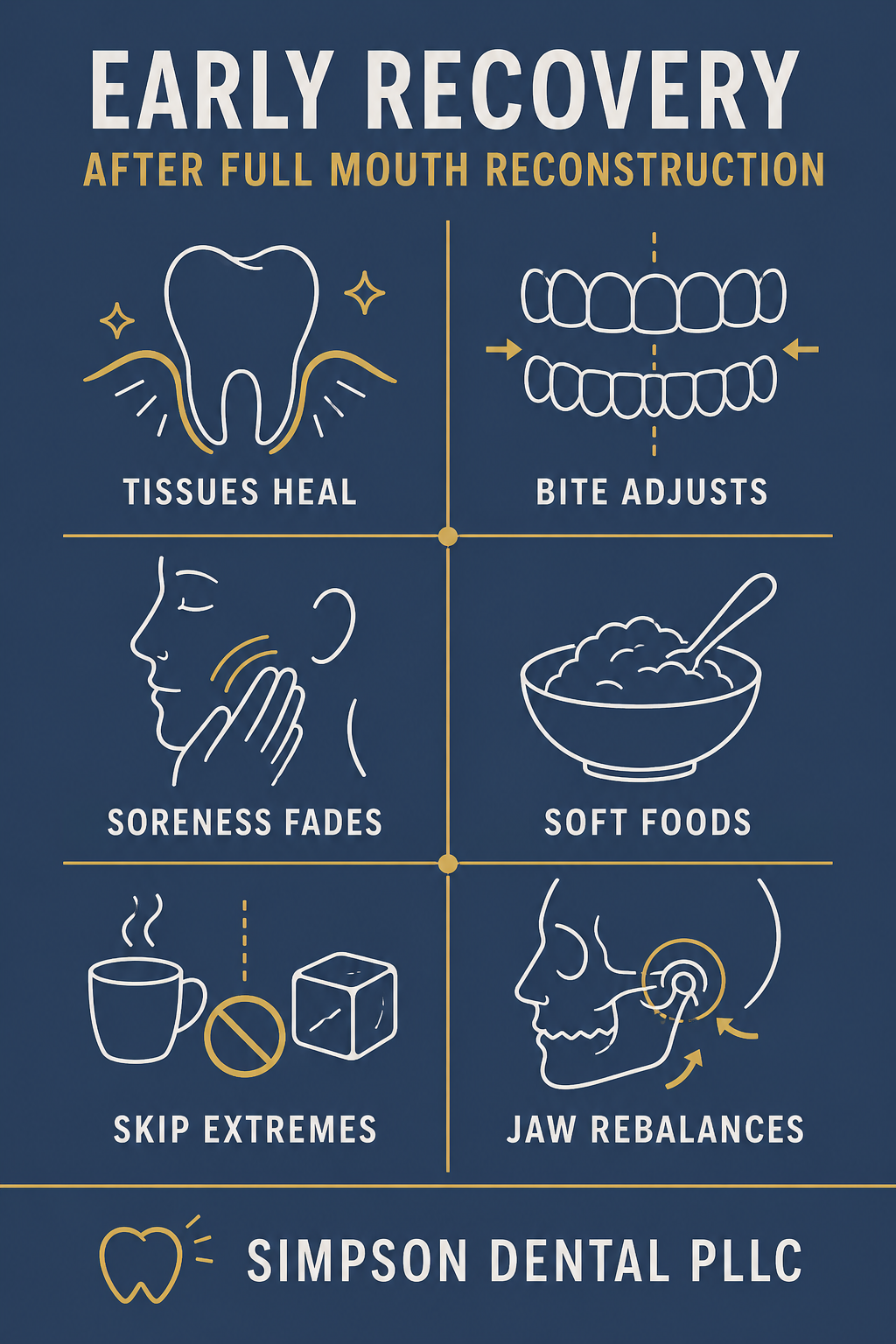
The early phase of recovery is focused on allowing your tissues to heal and your bite to settle. Some mild tenderness and sensitivity are completely normal following restorative dental treatment, and these sensations typically fade as the days pass. Sticking to softer foods and avoiding temperature extremes can go a long way toward keeping you comfortable during this window.
You may also notice that your bite feels a little different from what you expected at first. That adjustment period is completely normal. Your jaw muscles, joints, and surrounding tissues are getting used to your new restorations, and small irregularities usually settle on their own as everything begins to feel more balanced and aligned.
Long-Term Changes You Can Expect
Once the initial healing phase is behind you, the more lasting benefits of full mouth reconstruction become part of everyday life. Research published by the National Institutes of Health confirms that dental rehabilitation significantly improves chewing function, facial aesthetics, and self-esteem — outcomes that affect quality of life in a very real and measurable way. These improvements tend to build over time rather than arrive all at once.
Eating and Speaking With Confidence
You will likely notice the difference in how you chew much sooner than you would expect, and it makes a huge impact on your day-to-day life right away. Once you can easily eat foods that used to be difficult or off-limits, it is much easier to get the nutrition you need and keep your energy levels up. Many patients also find they can speak more clearly once structural issues are fixed. While these benefits continue to improve over several months, most people feel a natural, effortless shift within just the first few months after their procedure.
Caring for Your New Smile
Protecting your investment comes down to consistent daily habits. Brushing twice a day, flossing regularly, and keeping your scheduled appointments are the pillars of long-term success. Our advanced technology allows Dr. Christen Simpson Raynes and Dr. Chase Preston to closely monitor your restorations at every visit, catching small concerns before they develop into larger ones. Our on-site dental lab also ensures that any necessary adjustments are completed quickly and with precision.
Ongoing Care After Full Mouth Reconstruction
Patients who have undergone full mouth reconstruction often follow a customized maintenance schedule, particularly in the first year. More frequent check-ins allow our team to confirm that healing is progressing well and that all restorations are functioning as designed. These visits also give you a chance to raise any questions that come up as you adjust to your new smile.
The details of your ongoing care plan will depend on the scope of your treatment and the health of your underlying bone and gum tissue. What remains consistent across all patients is our commitment to being your dental team for the long haul. Our greatest joy is seeing patients at preventive care appointments, thriving and enjoying the benefits of quality dentistry year after year.
Start Your Recovery With Simpson Dental PLLC
A full mouth reconstruction is a significant milestone, and the team at Simpson Dental PLLC is committed to making sure your results last. Dr. Christen Simpson Raynes and Dr. Chase Preston bring decades of combined clinical knowledge, a deeply rooted dedication to quality materials and techniques, and the kind of personalized care that only comes from a practice where patients are treated like family. From diagnostics to delivery, every step of your treatment is supported by the most advanced resources available in West Virginia.
When you are ready to take the next step, we are here to help you plan for a lifetime of confident, healthy smiles. Schedule your appointment with our Charleston team today.
How long does it take to fully recover from full mouth reconstruction?
Initial healing from individual procedures typically takes one to two weeks, but full mouth reconstruction often involves multiple phases of treatment spread over several months. During that time, your bite, comfort, and function continue to improve gradually. Most patients feel significantly better within the first few months and reach their most stable, comfortable result within six to twelve months of completing treatment.
What foods should I avoid right after full mouth reconstruction?
In the early weeks of recovery, softer foods are best. Avoid very hard, crunchy, chewy, or sticky foods that put excessive force on new restorations or irritate healing tissue. Very hot or very cold foods and beverages can also cause sensitivity early on. Your care team will give you specific guidance based on the procedures performed, and restrictions typically ease considerably as healing progresses.
How often will I need to come in for follow-up care after reconstruction?
Follow-up frequency depends on the scope of your treatment and how healing progresses, but patients who have completed full mouth reconstruction typically see their dentist more frequently in the first year than in subsequent years. These visits allow the team to monitor healing, check that restorations are functioning properly, and make any minor adjustments needed. Once everything is stable, most patients transition to a routine preventive care schedule.
Will my reconstructed teeth look and feel like natural teeth?
Modern restorations are designed to closely mimic the look and function of natural teeth. Custom-crafted crowns, veneers, and implant-supported restorations reflect light similarly to natural enamel and are shade-matched to blend with surrounding teeth. Function-wise, most patients find that their ability to chew, bite, and speak feels natural and unrestricted once the adjustment period is complete. Simpson Dental’s on-site lab gives our team precise control over the fit and appearance of every restoration we place.
ABOUT THE AUTHOR
Dr. Christen Simpson Raynes
Dentist, Simpson Dental PLLC — Charleston, WV
Dr. Christen Simpson Raynes is a third-generation dentist at Simpson Dental PLLC in Charleston, West Virginia, continuing a family legacy of dental care that began in 1948. She focuses on full arch implant restoration and complex restorative cases, holds memberships with the Academy of Osseointegration and the American Academy of Implant Dentistry, and has helped restore more than 6,000 implants for patients across the Charleston region.