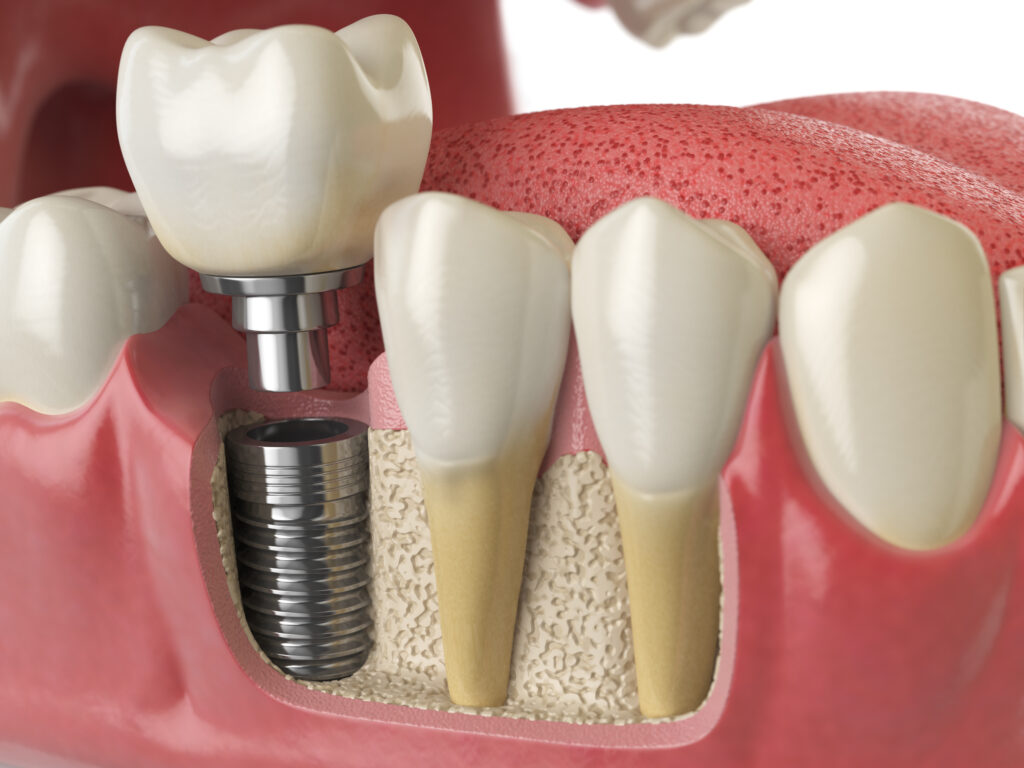
Implant surgery replaces missing teeth with permanent posts anchored into your jawbone. The procedure typically takes one to two hours per implant, though the exact timeline depends on how many teeth you’re replacing and whether you need additional procedures. Most patients experience minimal discomfort during the surgery itself thanks to local anesthesia, and recovery usually progresses smoothly over several months.
Simpson Dental PLLC provides dental implant surgery to help patients restore their smiles with confidence. Our in-office dental lab allows us to create custom restorations efficiently, and our three full-time technicians with a combined 60 years of experience ensure each piece fits naturally. Dr. Mark Simpson, Dr. Christen Raynes, and Dr. Chase Preston bring the generational knowledge established in 1948 by Dr. Bob to every implant case at our Charleston, West Virginia, practice.
Pre-Surgery Consultation and Planning
Your dentist examines your mouth and takes detailed images of your jaw before scheduling implant surgery. These images may include X-rays or CT scans to assess bone density and locate important structures like nerves and sinuses. Your dentist uses this information to determine the best position for your implants and whether you need bone grafting to support them.
You’ll discuss your medical history and any medications you take during this consultation. Certain health conditions or medications may affect healing or require special precautions during surgery. Your dentist may also recommend sedation dentistry options if you feel anxious about the procedure. Having a clear plan before surgery helps everything proceed smoothly on the day of your appointment.
The Day of Your Implant Placement
The implant placement begins with numbing the surgical site so you won’t feel pain during the procedure. Your dentist makes a small opening in your gum tissue to access the jawbone, then creates a precise channel where the implant post fits. The post, which serves as an artificial tooth root, is placed into this space and secured in position. The gum tissue may be closed over the implant or left open, depending on your treatment plan.
Some patients receive temporary teeth on the same day as implant placement, while others wait for the implant to integrate with the bone before adding the final restoration. The approach depends on factors like implant location, bone quality, and your overall treatment goals. Your dentist explains which option works best for your situation during the planning phase.
Recovery in the First Few Days
You may experience some swelling, minor bleeding, and discomfort for a few days after implant surgery. These symptoms are normal parts of the healing process. Applying ice packs to the outside of your face helps reduce swelling during the first 24 hours. Your dentist may prescribe pain medication or recommend over-the-counter options to keep you comfortable.
Stick to soft foods for the first week while your surgical site heals. Avoid hot liquids, crunchy foods, and anything that requires vigorous chewing near the implant area. Good options include smoothies, yogurt, mashed potatoes, and soup. Proper nutrition supports healing while protecting your surgical site from irritation.
What Happens During Osseointegration
Osseointegration is the process where your jawbone grows around and fuses with the implant post. This phase typically takes three to six months, though the exact timeline varies by individual. During this period, you continue normal activities and maintain good oral hygiene habits while avoiding excessive pressure on the implant site.
Your dentist monitors your healing through follow-up appointments to ensure the implant integrates properly. Once osseointegration is complete, the implant becomes a stable foundation for your permanent restoration. This integration is what gives dental implants their strength and longevity compared to other tooth replacement options.
Placing Your Final Restoration
After your implant has fully integrated with your jawbone, your dentist attaches an abutment to connect the implant post to your final crown, bridge, or denture. This minor procedure may require a small incision if your gum tissue was closed over the implant during the initial surgery. The gum tissue heals around the abutment over the next few weeks, creating a natural-looking emergence for your restoration.
Your dentist takes impressions or digital scans to create your custom restoration. The crown, bridge, or denture is designed to match your natural teeth in color, shape, and function. Once the restoration is ready, your dentist secures it to the abutment, completing your implant treatment. You can then enjoy eating, speaking, and smiling with confidence.
Begin Your Implant Journey at Simpson Dental PLLC
Dental implant surgery offers a permanent solution for missing teeth when performed by skilled practitioners. Simpson Dental PLLC combines advanced technology with decades of experience to deliver implant treatments you can rely on. Our commitment to quality dentistry means using the finest materials and techniques to give you results that last.
Dental implant surgery offers a permanent solution for missing teeth when performed by skilled practitioners. Simpson Dental PLLC combines advanced technology with decades of experience to deliver implant treatments you can rely on. Our commitment to quality dentistry means using the finest materials and techniques to give you results that last. Whether you’re missing one tooth or need a full arch restoration, we can help you understand your options and what to expect throughout the process. Contact our Charleston office to schedule a consultation and take the first step toward restoring your smile with dental implants.